Explore the Unknown

Discover the secrets of black holes, galaxies, and the origin of the universe.

Advertisement

Trending Now

Documentary Note

The Speed of Light Is Not a Bridge, It Is a Cage

A cinematic-scale perspective on time, distance, and how the universe hides itself.

Humanity has been fooled by the speed of light for thousands of years. In one second, light can circle the Earth seven and a half times. It looks insanely fast. But on a cosmic scale, it's slow—painfully slow.

The speed of light isn't a bridge. It's a cage.

What you're seeing from the Sun right now is an image from eight minutes ago. If the Sun exploded this instant, we'd live eight perfectly normal minutes without knowing anything was wrong.

It gets stranger. The Andromeda Galaxy we see tonight is frozen in time—2.5 million years old. Back then, humans hadn't even learned how to walk upright.

On the scale of the universe, light isn't really light. It's a letter that will never arrive.

Read full documentary note

Human radio signals have been traveling for a hundred years, and they've barely escaped one-tenth of one percent of the Milky Way. If Earth vanished tomorrow, 99.999% of the universe would never know humans existed—not for billions of years.

And the truly terrifying part? If an alien civilization discovered Earth today and decided to come find us, they wouldn't see Earth where it is now—they'd see where it was tens of thousands of years ago.

Our solar system is racing through the galaxy at 220 kilometers per second. In that time, Earth has moved billions of kilometers. By the time they reach the coordinates they saw, Earth wouldn't be there.

And worse—the universe is expanding faster and faster. Some regions are already moving away from us faster than light itself. Their light will never reach us. Ever.

So what does that mean? It means the universe is actively hiding itself from us.

So when we gaze into the universe, we are actually looking back in time.

The speed of light is not just the ultimate speed limit, it also binds time and space together. According to Albert Einstein's theory of relativity, the closer you move to the speed of light, the slower time passes for you.

If a spacecraft were to travel at near-light speed, only a few years might pass for those on board, while hundreds of years could have gone by on Earth.

And precisely because the speed of light has a limit, we can never see the universe as it exists "right now". Everything we see is history.

In a sense, the universe is not just a vast expanse of space, but a gigantic museum of time. And light is its only messenger.

Advertisement

Featured Articles

Latest and most popular articles from all categories
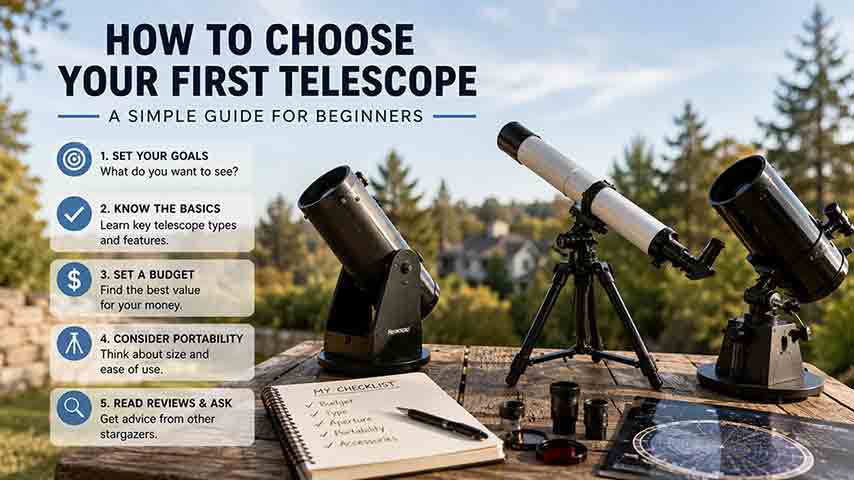
Telescope Buying GuidesHow to Choose Your First Telescope: A Beginner’s Buying Guide

How to Choose Your First Telescope: A Beginner’s Buying Guide

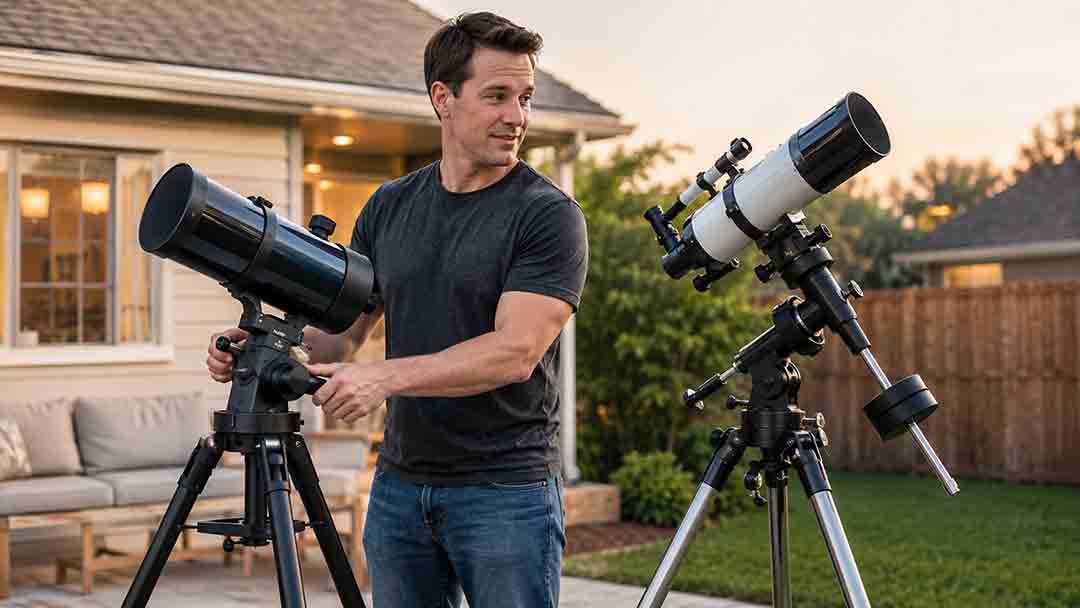
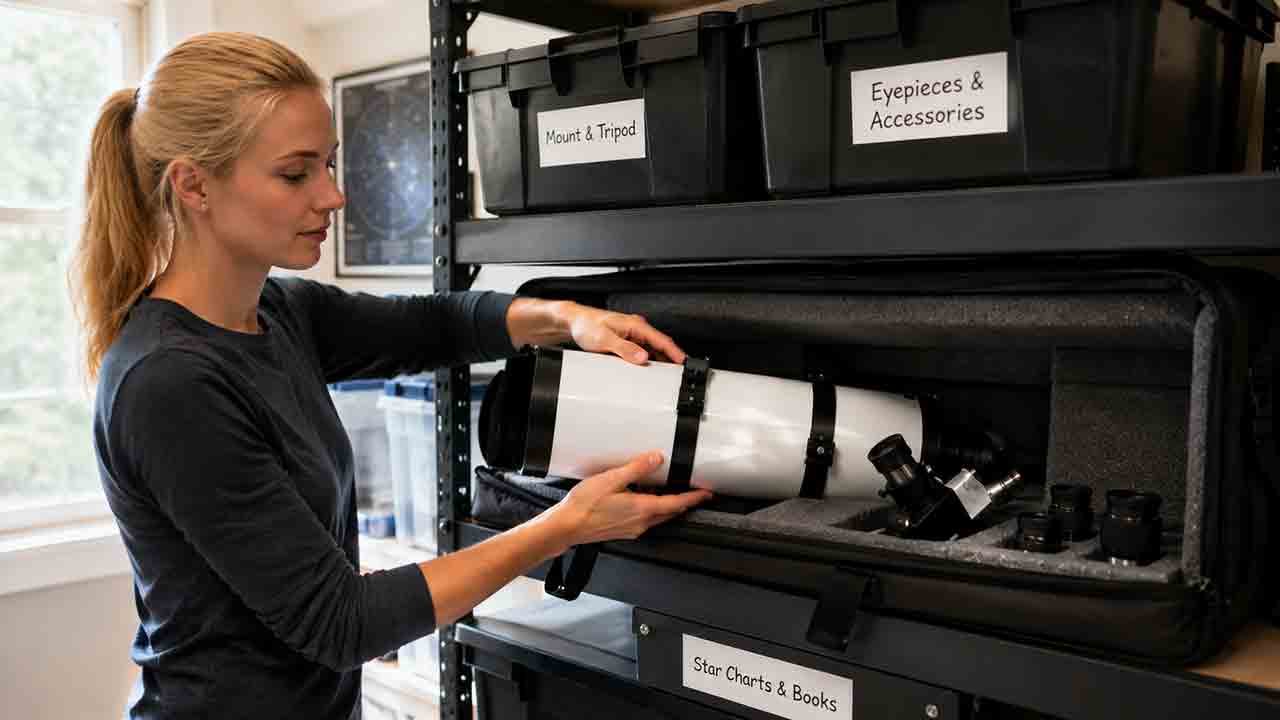
Choosing a first telescope requires more than comparing aperture or advertised magnification. This practical beginner’s guide explains how to match a telescope to observing goals, light pollution, storage space, setup tolerance, and interest in visual observing or imaging. It compares refractors, Dobsonian reflectors, compound telescopes, and smart telescopes, then shows how aperture, focal length, focal ratio, magnification, and mount stability affect real use. Readers can use a quick-selection table, the original SPACE decision framework, a worked specification comparison, realistic household scenarios, new and used equipment checklists, and a troubleshooting chart. The guide also explains why a larger aperture cannot fully overcome bright urban skies, what to verify before buying a software-dependent smart telescope, and how to observe the Sun safely. Recommendations are based on authoritative guidance and published specifications rather than hands-on product testing or paid rankings

2026/08/035 minRead More
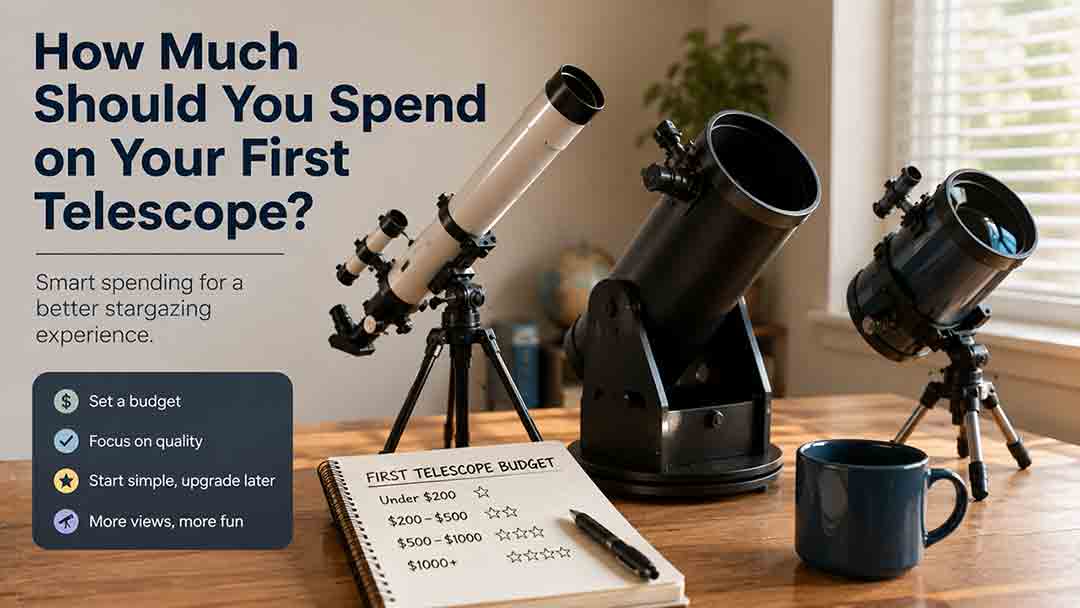
Telescope Buying GuidesHow Much Should You Spend on Your First Telescope?

How Much Should You Spend on Your First Telescope?

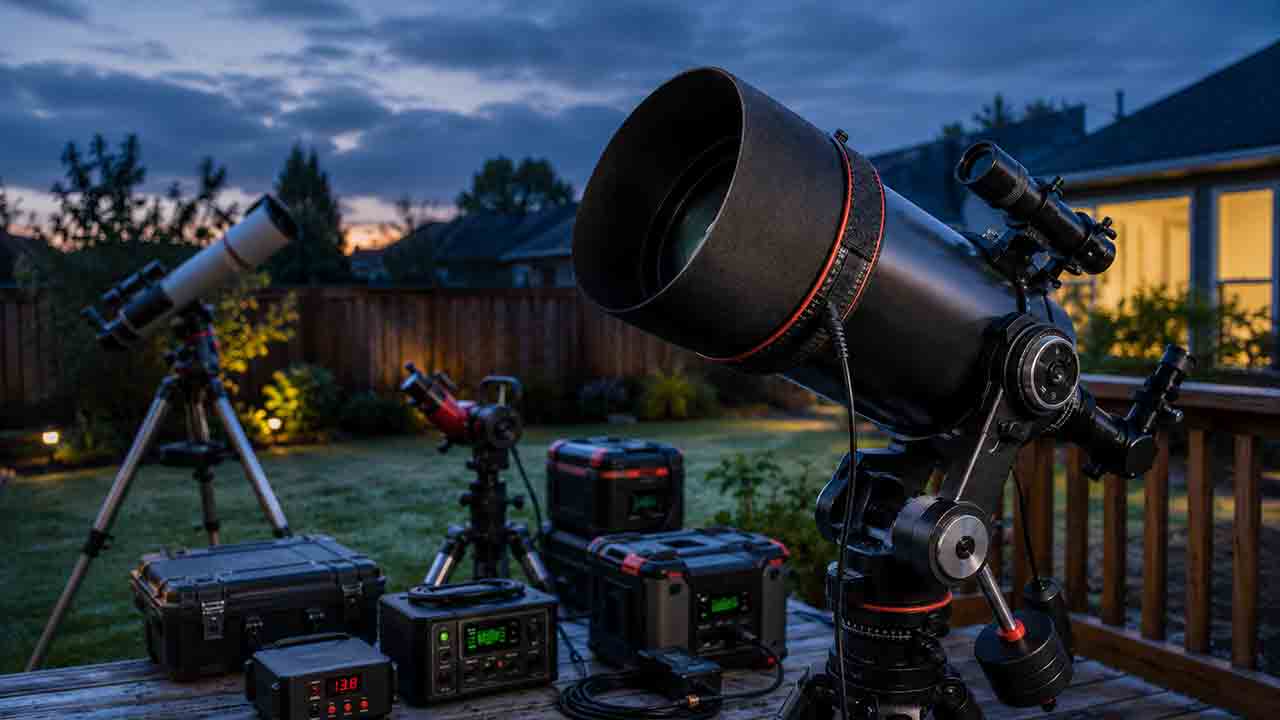
Most beginners should plan a complete first-telescope budget of roughly $350–$700, although the right amount depends on observing goals, portability, automation, and whether the buyer wants direct eyepiece viewing or screen-based imaging. This guide explains what different budget ranges can realistically provide, why very low-cost telescope packages require caution, and when spending more for aperture, GoTo control, smart imaging, or compact optics is justified. It also separates visual astronomy from modular astrophotography, calculates total ownership cost, and shows how accessories, power, storage, shipping, and software can change the real price. The original FIRST Budget Test helps readers evaluate favorite targets, included equipment, real-world portability, desired skills, and total cost. Practical scenarios, a buying checklist, common mistakes, troubleshooting guidance, safety information, and current US market examples help beginners choose a stable, complete setup they are likely to use regularly.

2026/08/035 minRead More
Telescope Buying GuidesAre Smart Telescopes Worth It for Beginners?

Are Smart Telescopes Worth It for Beginners?

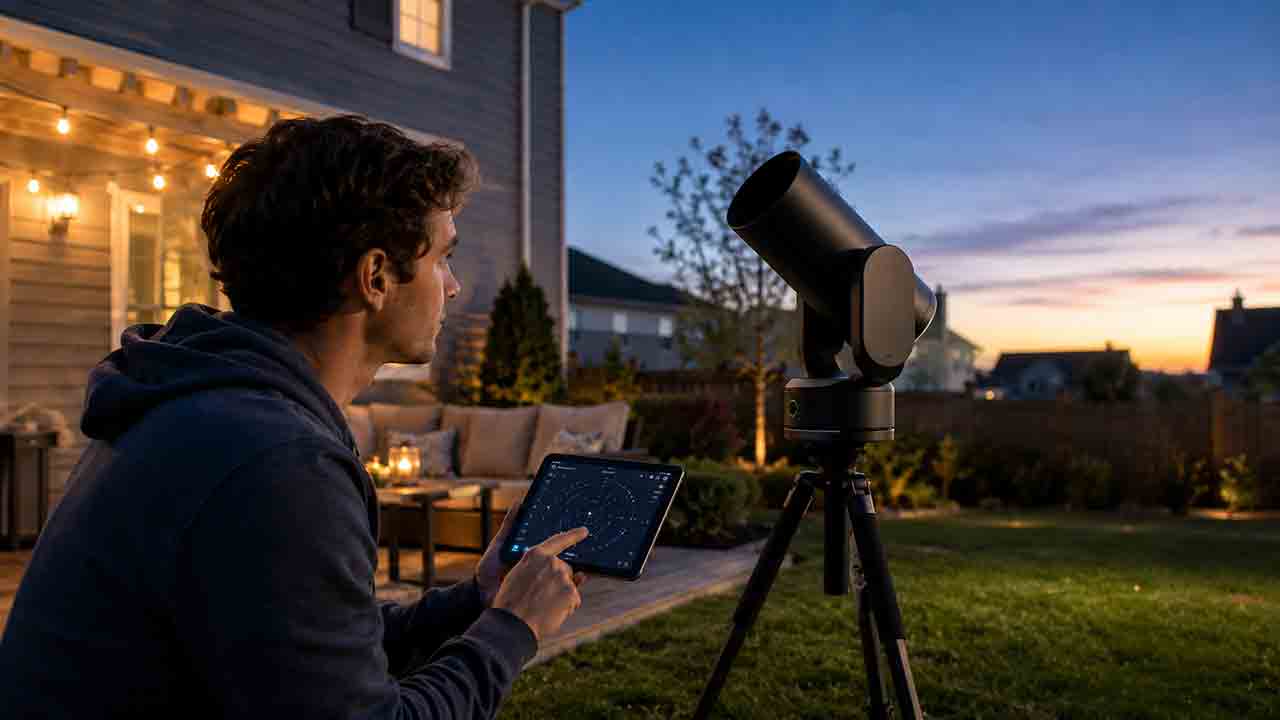
Smart telescopes can be worthwhile for beginners who want automated target finding, live-stacked deep-sky images, and a compact system controlled from a phone or tablet. However, they are not a universal replacement for traditional telescopes. Beginners who value direct eyepiece views, high-magnification planetary observing, manual sky navigation, or component-by-component upgrades may prefer a refractor, reflector, or catadioptric telescope. This guide explains how smart telescopes combine optics, cameras, motorized tracking, and image processing; compares them with traditional and modular imaging setups; and examines costs, software dependence, batteries, light pollution, target suitability, and long-term flexibility. It also provides the original WORTH decision framework, a hypothetical cost-per-session example, real-world beginner scenarios, a purchase checklist, common mistakes, and troubleshooting steps. The goal is to help readers choose based on their actual observing style rather than marketing claims or specifications alone

2026/08/035 minRead More
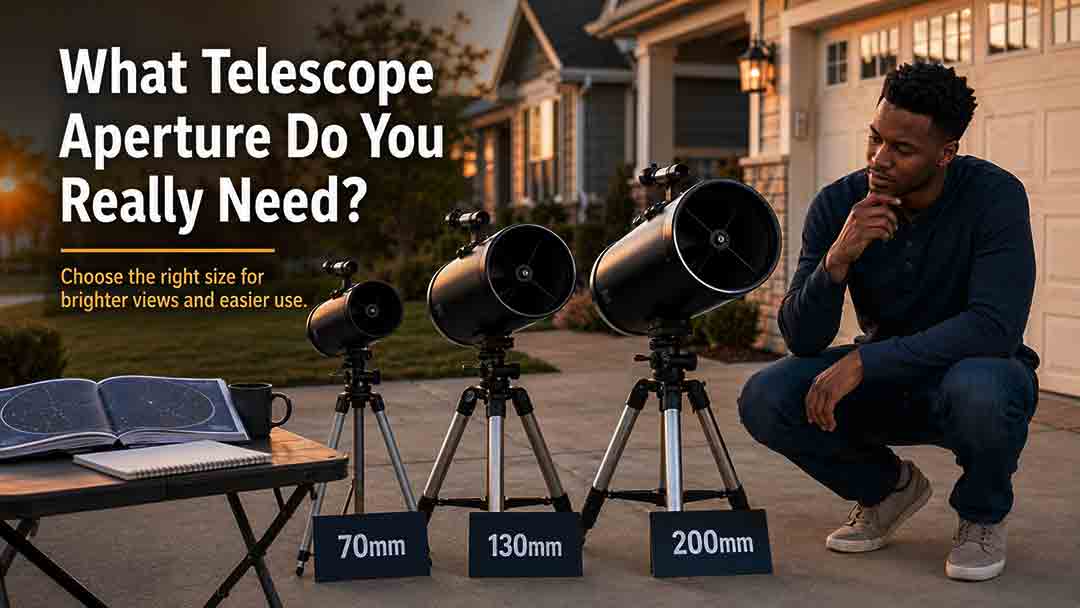
Telescope Buying GuidesWhat Telescope Aperture Do You Really Need?

What Telescope Aperture Do You Really Need?

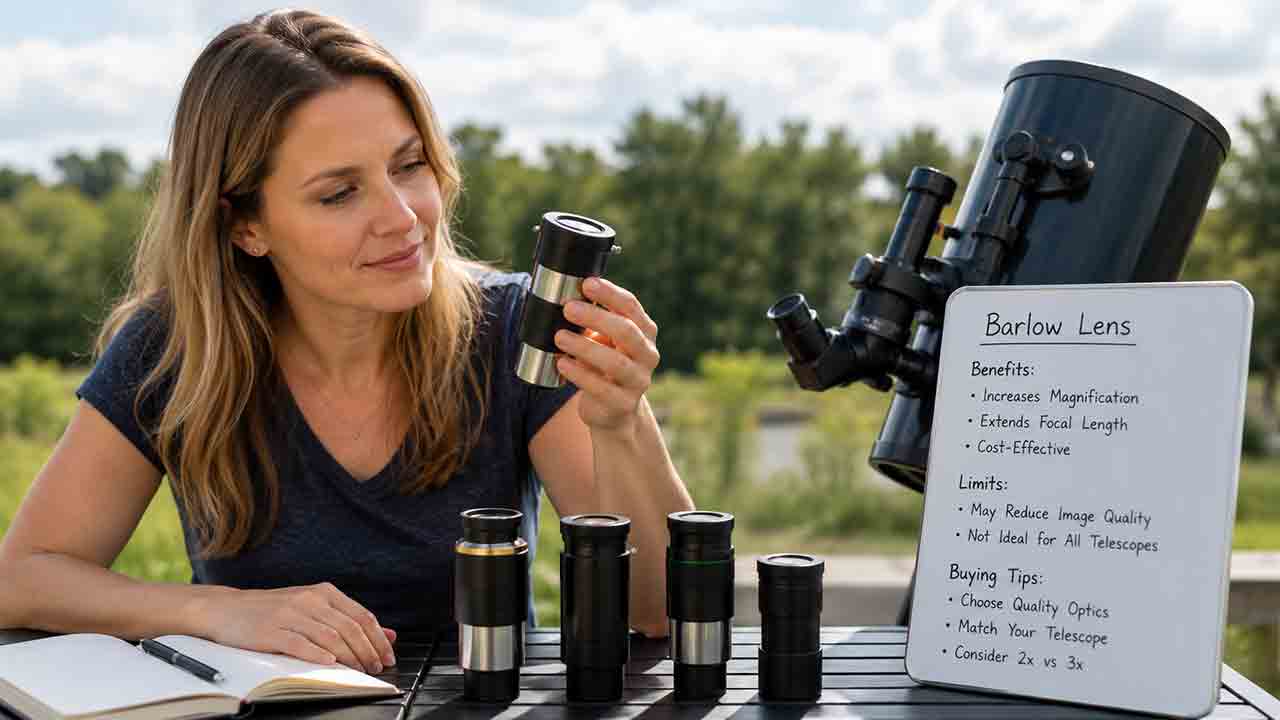
This guide explains how to compare up to four telescope eyepieces using magnification, exit pupil, true field, sky coverage, eye relief, weight, and observer-pupil matching. It defines a reference-eyepiece method so every ratio and percentage has a clear direction, prioritizes field-stop-based true field when reliable data is available, and warns when AFOV and field-stop estimates differ or when mixed calculation methods are used. The article adds the original Four-Dimension Eyepiece Role Map, a reproducible same-field-stop example, pupil-adjusted brightness calculations, weight conversion rules, compatibility reminders, and a transparent field-method warning threshold. Readers can identify meaningful role differences, evaluate possible overlap, and understand what calculations cannot reveal, including optical quality, comfort, mechanical safety, and real-world compatibility. The guidance is based on published specifications and authoritative references rather than product testing or universal rankings

2026/08/035 minRead More
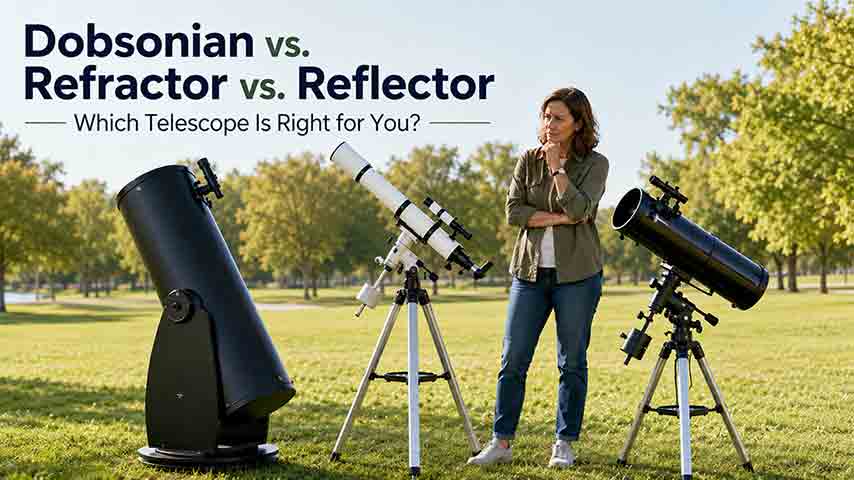
Telescope Buying GuidesDobsonian vs Refractor vs Reflector: Which Telescope Is Right for You?

Dobsonian vs Refractor vs Reflector: Which Telescope Is Right for You?

Choosing between a Dobsonian, refractor, and reflector becomes easier once you separate optical design from mount type. A Dobsonian is usually a Newtonian reflector on a simple rocker-box mount, making it a strong choice for visual observers who want generous aperture at a practical cost. Refractors favor portability, quick setup, and low maintenance, while tripod- or equatorial-mounted Newtonian reflectors offer more tracking and configuration options. This guide compares the three choices by observing targets, storage, collimation, mount stability, and astrophotography potential. It also includes an original SPACE decision framework, an aperture calculation, real-world buying scenarios, a practical decision tree, common mistakes, troubleshooting advice, and a purchase checklist. The goal is to help beginners choose a telescope they can transport, maintain, and use regularly—not simply the model with the largest advertised specifications.

2026/08/035 minRead More
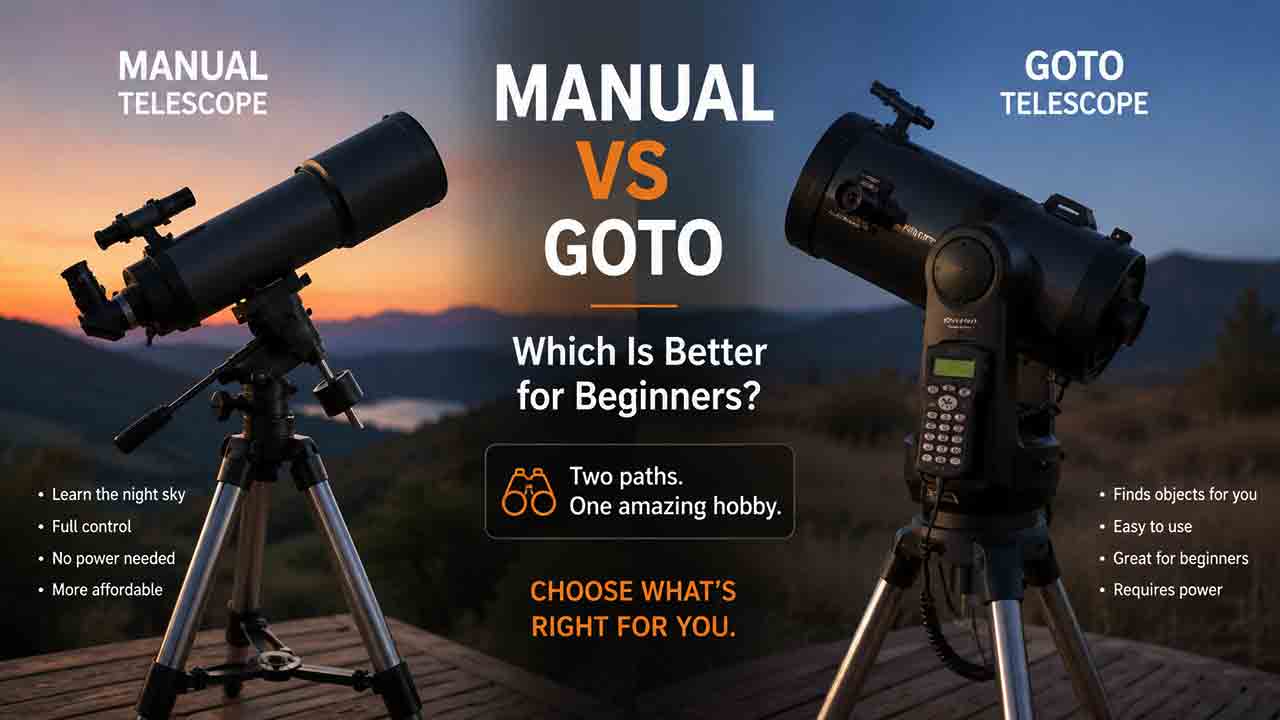
Telescope Comparisons & TestsManual vs GoTo Telescope: Which Is Better for Beginners?

Manual vs GoTo Telescope: Which Is Better for Beginners?

Manual and GoTo telescopes solve different beginner problems. A manual telescope offers simpler setup, fewer electronic dependencies, and often more optical capability within a limited budget, while a GoTo telescope can locate cataloged objects and track them after a successful alignment. This comparison explains why GoTo does not improve aperture, remove light pollution, or automatically make a telescope suitable for long-exposure astrophotography. It compares setup time, tracking, portability, reliability, learning value, power requirements, and total ownership cost. The article also introduces the original TRACK decision framework, an illustrative break-even calculation for session time, five real-world buyer scenarios, separate purchase checklists, and troubleshooting tables for both manual and computerized systems. Beginners can use the guide to decide whether they prefer learning sky navigation, managing an electronic alignment workflow, or choosing a push-to system that combines manual movement with digital guidance."

2026/08/035 minRead More
Advertisement

Science Deep Dive

High-quality long-form content exploring cosmic phenomena in depth
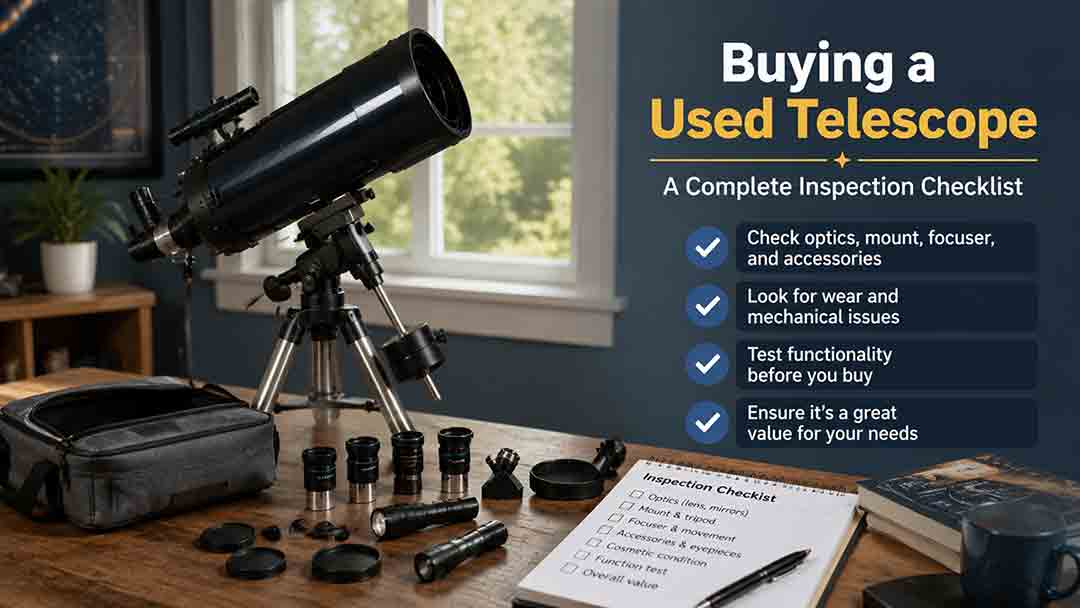
Buying a Used Telescope: A Complete Inspection Checklist
Telescope Comparisons & Tests

Buying a Used Telescope: A Complete Inspection Checklist

A used telescope can offer excellent value when the buyer verifies the exact model, ownership, optical condition, mechanical safety, electronic function, and complete accessory list before payment. This guide provides a structured inspection process for refractors, Newtonian and Dobsonian reflectors, Schmidt-Cassegrains, Maksutovs, manual and computerized mounts, eyepieces, filters, cameras, and smart telescopes. It distinguishes harmless dust and cosmetic wear from fungus, coating failure, bent hardware, water damage, unsupported electronics, and unsafe solar equipment. Readers also receive seller questions, daytime and nighttime test procedures, a repair-adjusted pricing formula, transaction-safety guidance, four practical scenarios, a buy-negotiate-walk-away framework, and a comprehensive printable checklist. The central recommendation is to price only verified function and preserve enough budget for missing parts, repairs, and uncertainty.

2026/08/035 min
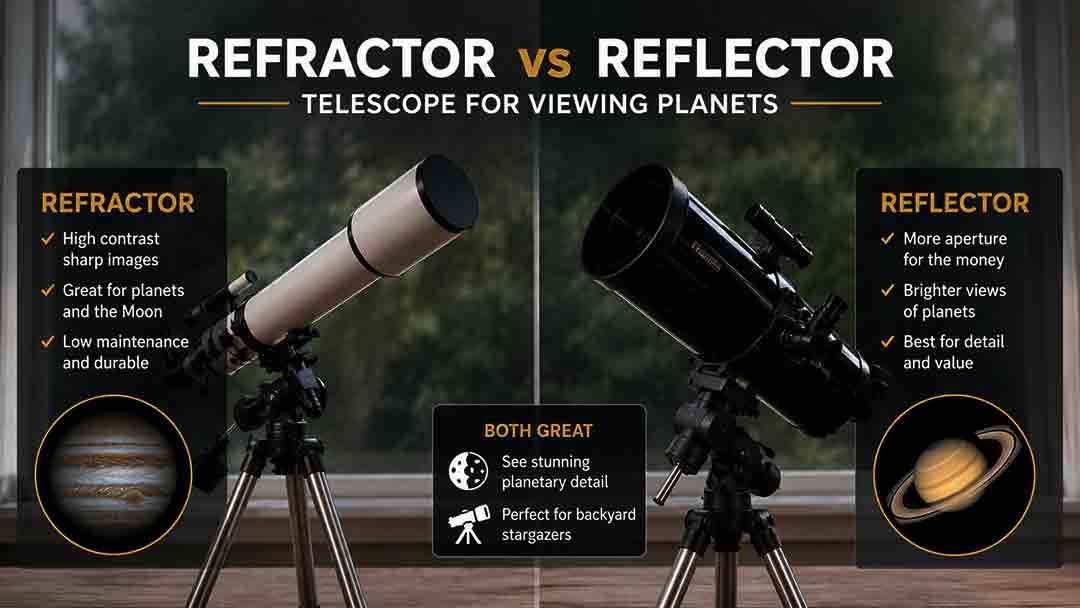
Refractor vs Reflector Telescope for Viewing Planets
Telescope Comparisons & Tests

Refractor vs Reflector Telescope for Viewing Planets

A refractor is usually the easier planetary telescope at the same aperture, while a Newtonian reflector usually provides more resolving power for the same budget by offering a larger mirror. This guide compares unobstructed contrast, chromatic aberration, central obstruction, collimation, thermal preparation, mount stability, tracking, magnification, and portability. It explains how each design performs on the Moon, Jupiter, Saturn, Mars, Venus, Uranus, and Neptune, and separates equal-aperture, equal-price, and equal-portability comparisons. A 100 mm versus 150 mm aperture calculation, size recommendations, real-world buyer scenarios, a six-step decision framework, troubleshooting guidance, and a complete buying checklist help readers select a telescope that will deliver useful planetary performance in their actual observing environment.
2026/08/035 min
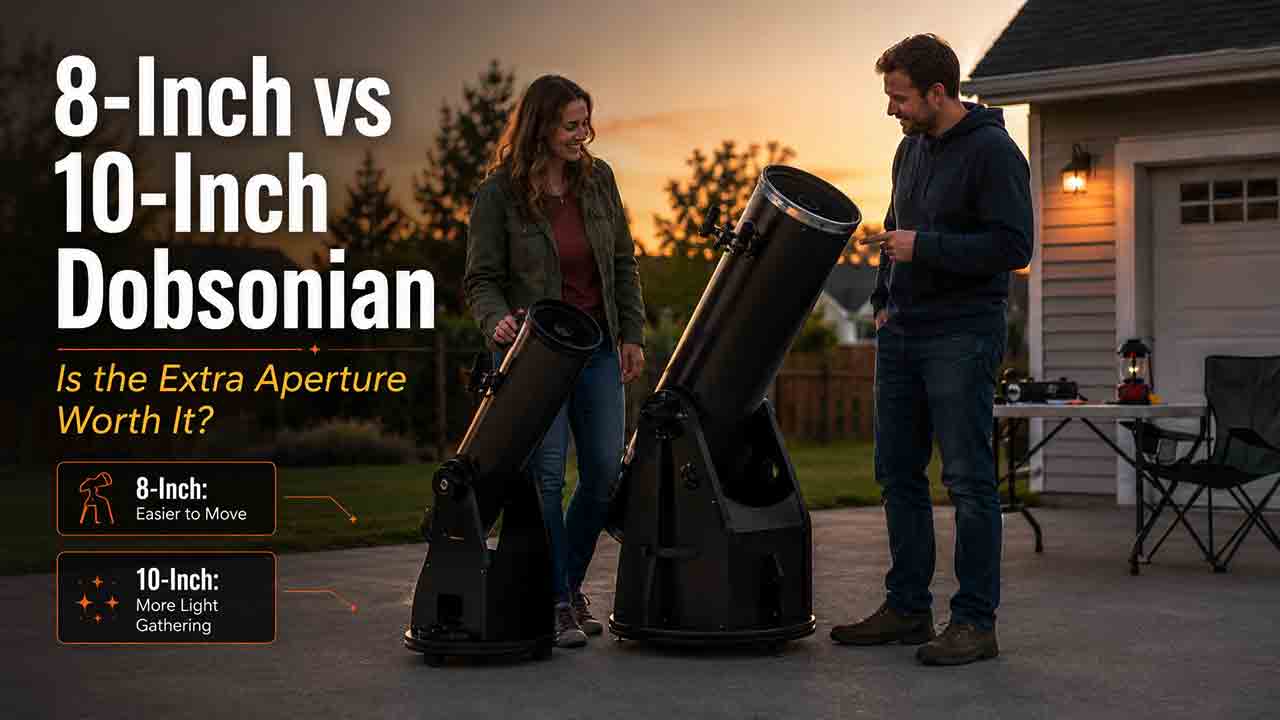
8-Inch vs 10-Inch Dobsonian: Is the Extra Aperture Worth It?
Telescope Comparisons & Tests

8-Inch vs 10-Inch Dobsonian: Is the Extra Aperture Worth It?

An 8-inch Dobsonian is the better default purchase for most first-time buyers, while a 10-inch is worth considering when deep-sky performance is the priority and the larger tube can be moved easily. This guide explains the 10-inch telescope’s approximately 56% greater nominal collecting area, higher theoretical resolution, and practical advantages on globular clusters, faint stars, galaxies, and nebulae. It also examines the less obvious tradeoffs: wider and heavier components, faster focal ratios, tighter collimation, more visible coma, larger exit pupils, thermal preparation, storage, vehicle fit, and total ownership cost. A same-series specification example, eyepiece calculations, real-world buyer scenarios, a transport fit test, troubleshooting guidance, and a detailed checklist help readers choose the telescope they are most likely to use regularly
2026/08/035 min
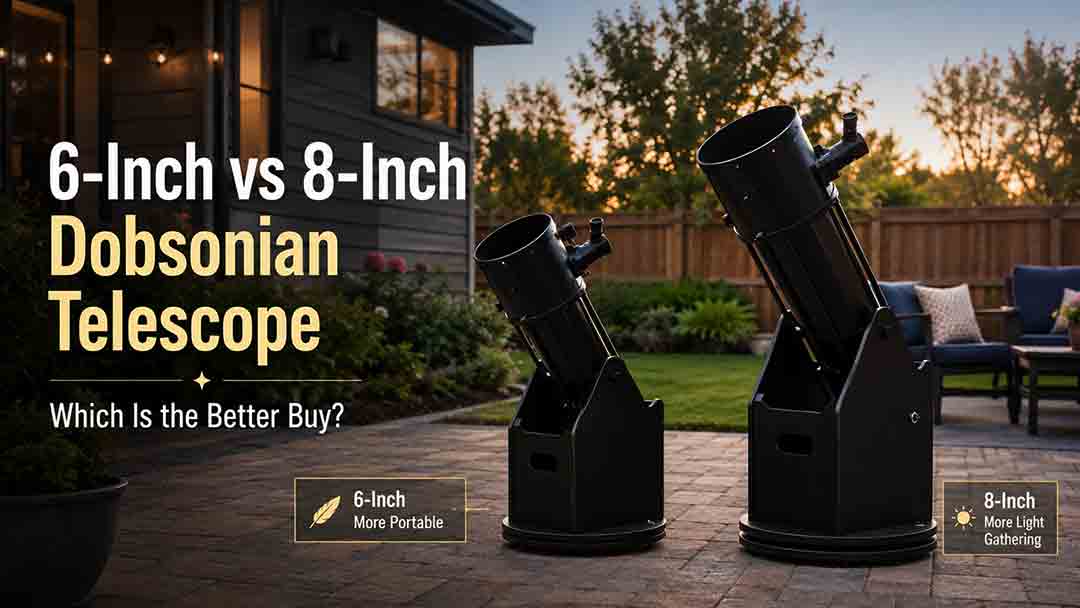
6-Inch vs 8-Inch Dobsonian Telescope: Which Is the Better Buy?
Telescope Comparisons & Tests

6-Inch vs 8-Inch Dobsonian Telescope: Which Is the Better Buy?

An 8-inch Dobsonian is usually the stronger optical value because its mirror has about 78% more gross collecting area than a 6-inch, providing greater reach for faint stars, globular clusters, nebulae, double stars, and fine lunar or planetary detail. A 6-inch Dobsonian can still be the better purchase when lower cost, a narrower tube, easier carrying, faster setup, and the forgiving behavior of a typical f/8 optical system lead to more frequent use. This comparison separates theoretical aperture gains from practical ownership. It uses a dated same-family specification example, gross mirror-area and aperture-per-dollar calculations, target-by-target recommendations, the original LIFT decision framework, a real-route carrying test, five ownership scenarios, a purchase decision tree, a complete buying checklist, common mistakes, and troubleshooting guidance. The guide does not claim hands-on testing and emphasizes checking the exact model’s weight, dimensions, accessories, and focal ratio

2026/08/035 min
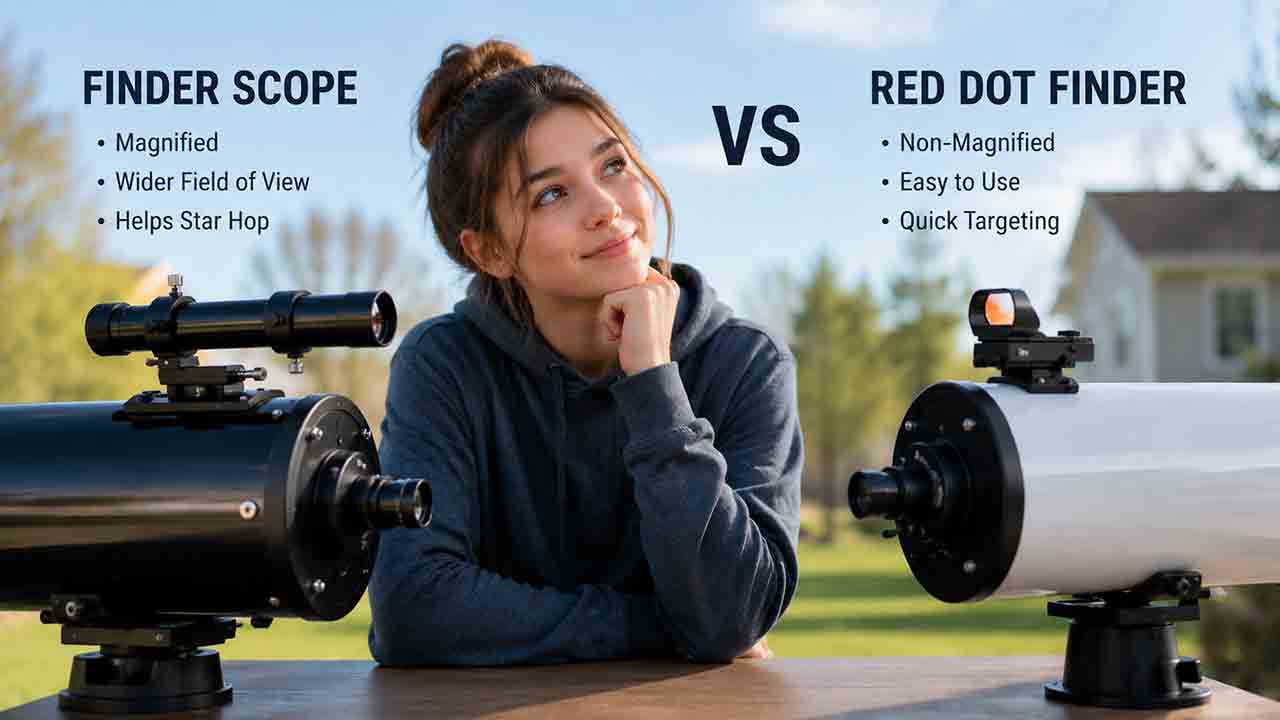
Finder Scope vs Red Dot Finder: Which One Should You Choose?
Eyepieces Mounts & Accessories

Finder Scope vs Red Dot Finder: Which One Should You Choose?

A red dot finder is usually the easier choice for quickly pointing a telescope at the Moon, planets, bright stars, or computerized-mount alignment targets. An optical finder scope is more useful when the observer needs magnification, additional light gathering, and detailed star patterns to locate faint clusters, nebulae, or galaxies. This guide compares unmagnified red dot sights with straight-through, right-angle, correct-image, and illuminated optical finders. It explains field of view, image orientation, light-pollution performance, batteries, ergonomics, mounting compatibility, alignment, and solar safety. The original SIGHT decision framework helps readers evaluate sky visibility, image orientation, geometry, hardware, and targeting method. A field-of-view calculation, dual-finder workflow, real-world scenarios, decision tree, buying checklist, common mistakes, and troubleshooting table help beginners choose a finder that matches their telescope and observing style
2026/08/035 min
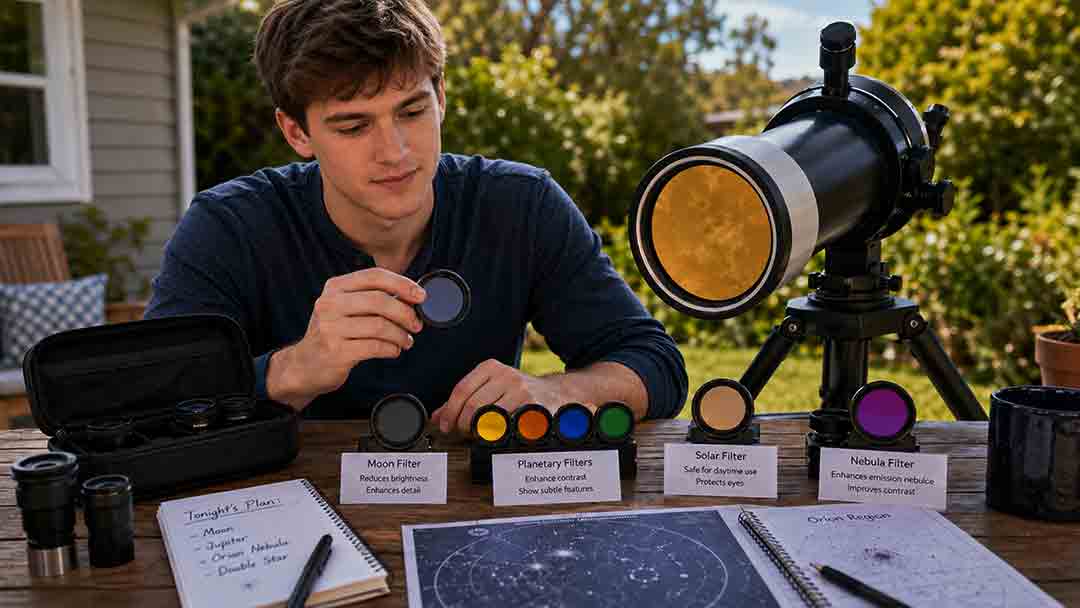
Telescope Filters Explained: Moon, Planetary, Solar, and Nebula Filters
Eyepieces Mounts & Accessories

Telescope Filters Explained: Moon, Planetary, Solar, and Nebula Filters

Telescope filters solve different observing problems and should never be treated as interchangeable accessories. This guide explains how neutral-density and variable polarizing filters can improve lunar comfort, how colored planetary filters selectively change contrast, why telescope solar filters require strict front-aperture safety, and how UHC, OIII, H-beta, and broadband filters affect selected deep-sky targets. It also clarifies why nebula filters usually do not improve galaxies, star clusters, or reflection nebulae. Readers receive a target-based comparison framework, an 8-inch Dobsonian example, visual-versus-imaging guidance, 1.25-inch and 2-inch compatibility checks, troubleshooting steps, solar-safety rules, and a detailed buying checklist. The central recommendation is to choose filters by target, transmission behavior, optical system, and intended use rather than by darkness, marketing name, or price

2026/08/035 min