Setup Collimation & Maintenance
Explore 5 fascinating articles about setup collimation & maintenance
Keep your optics in top shape. Step-by-step guides on storage safety, cleaning lenses, and aligning mirrors (collimation).
All Articles (5)
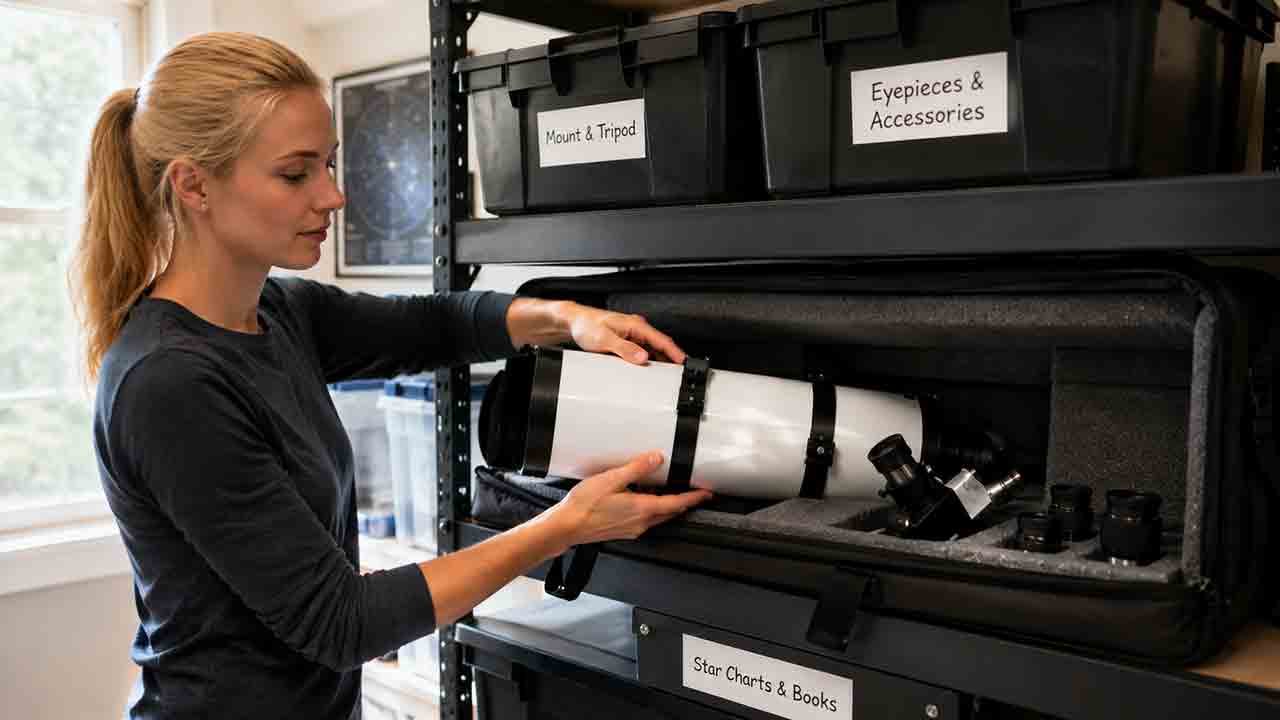
How to Store a Telescope Without Damaging the Optics
Safe telescope storage depends more on dryness, environmental stability, and secure support than on buying an expensive case. This guide explains how to dry a telescope after a damp observing session, when to install optical caps, and how to choose between assembled storage, a padded case, a closet, a garage, or an observatory. It provides separate recommendations for refractors, Schmidt-Cassegrains, Maksutovs, Newtonians, solid-tube and truss Dobsonians, mounts, eyepieces, filters, cameras, batteries, and solar equipment. Readers also receive a storage-location comparison, a three-home practical example, desiccant guidance, troubleshooting for condensation and musty cases, and a long-term checklist. The central recommendation is to keep equipment indoors when practical and never seal moisture inside caps, foam, bags, or covers.
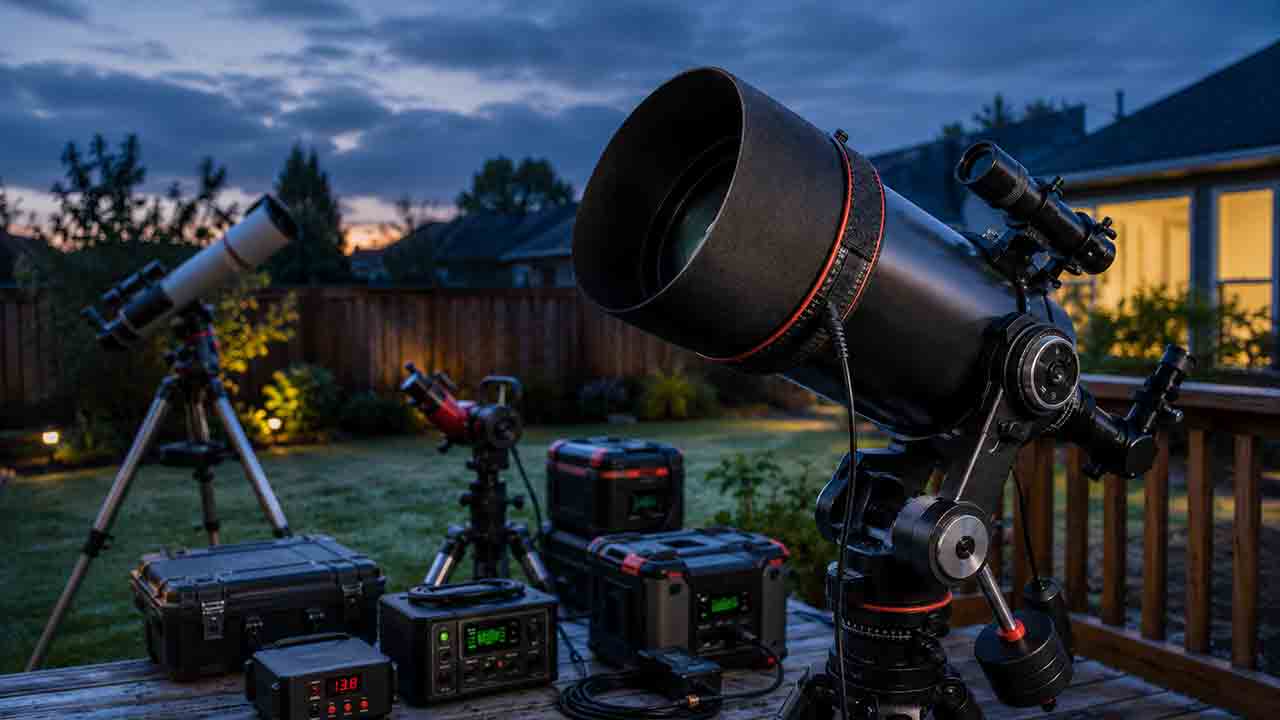
How to Prevent Dew on a Telescope
Telescope dew is best prevented before condensation becomes visible. Check the air temperature and dew point, extend or install a correctly fitted dew shield, and apply gentle controlled heat to exposed lenses, corrector plates, finder scopes, eyepieces, guide scopes, or secondary mirrors when conditions require it. This guide explains why optics can cool below the surrounding air, how to use dew-point spread as a planning signal, and why a shield and heater often work better together. It provides the original CLEAR decision framework, telescope-specific recommendations, a step-by-step setup process, a hypothetical battery-runtime calculation, real-world observing scenarios, a decision tree, buying and setup checklists, common mistakes, drying and storage guidance, and a troubleshooting table. The article also explains why optics should not be wiped while wet or sealed in a case before fully drying.
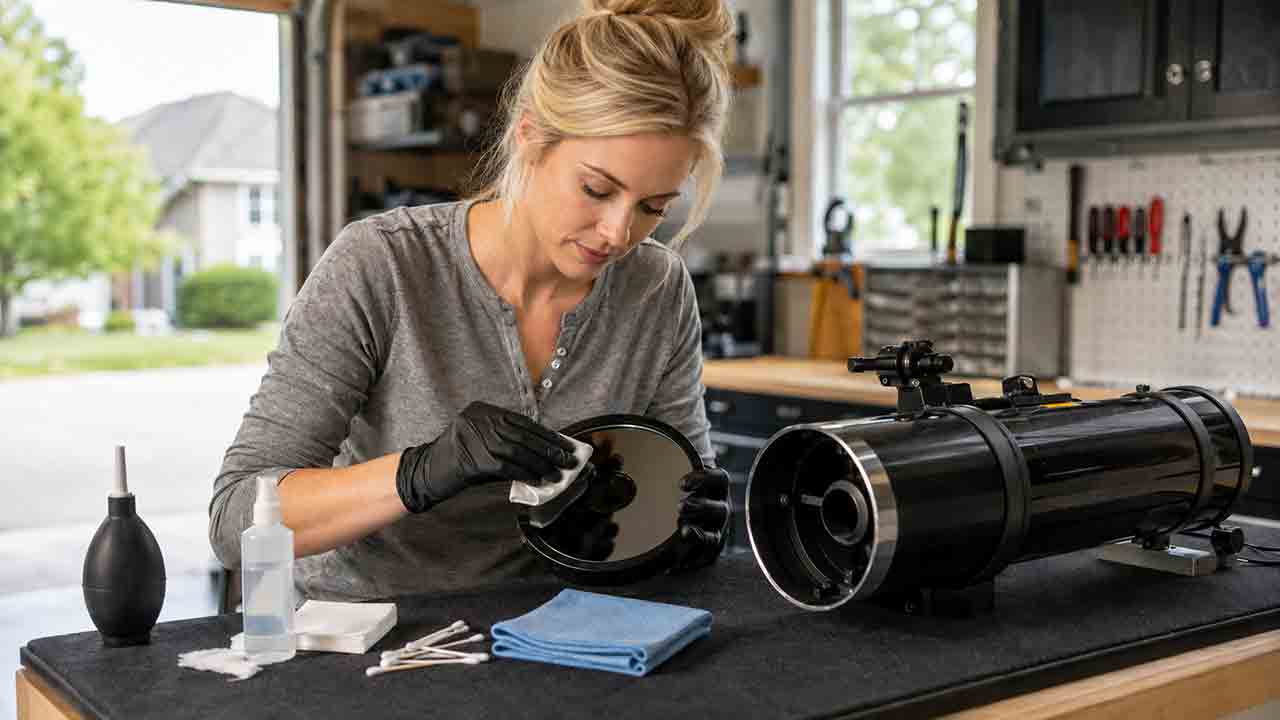
How to Clean Telescope Lenses and Mirrors Safely
Safe telescope cleaning begins by deciding whether cleaning is needed at all. This guide explains why a few dust particles should usually be left alone, how to remove loose debris without scratching coatings, and how to clean accessible eyepiece lenses, refractor objectives, and corrector-plate exteriors with minimal contact. It separates lens care from Newtonian primary-mirror washing, secondary-mirror handling, diagonal-mirror instructions, dew management, and sealed optical assemblies that require professional service. Readers also receive a surface-by-surface comparison table, a clean-wait-service decision framework, three real-world contamination examples, troubleshooting guidance, and complete preparation and aftercare checklists. The central recommendation is to follow the exact manufacturer instructions and use the least invasive method that solves a genuine performance or contamination problem.
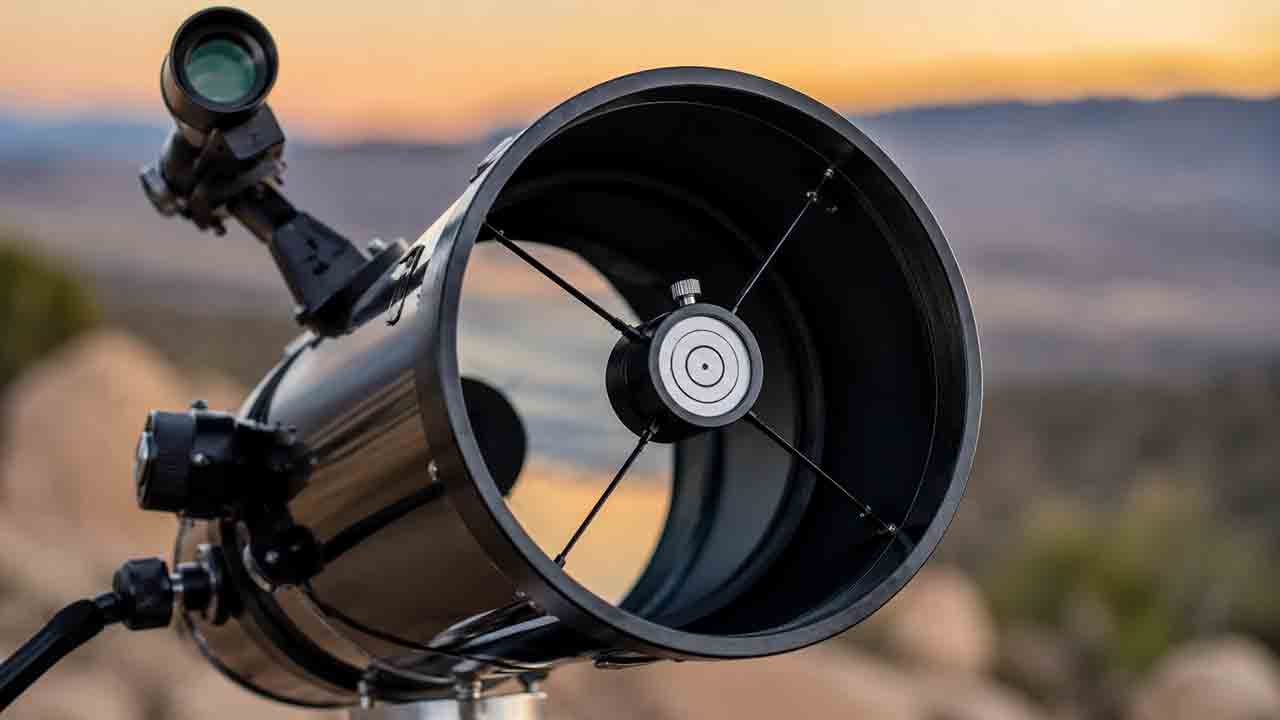
How to Collimate a Reflector Telescope Step by Step
Collimating a Newtonian or Dobsonian reflector means aligning the secondary mirror, focuser axis, and primary mirror in the correct order. This guide shows readers how to identify the adjustment hardware, center and rotate the secondary, aim it at the primary center mark, align the primary with a cap or Cheshire, and verify the result on a centered star. It also compares collimation caps, sight tubes, Cheshires, lasers, Barlowed lasers, and autocollimators; explains laser safety and tool-registration errors; and provides an 8-inch f/6 Dobsonian example. Troubleshooting sections address shifting alignment, oval secondary reflections, conflicting tool readings, off-axis star tests, and mechanical flexure. The central recommendation is to make only the adjustment supported by the observed error and to follow the exact telescope and tool manuals.

How to Set Up a Telescope for the First Time
Setting up a telescope successfully starts before dark. This guide shows beginners how to inventory parts, stabilize a tripod or Dobsonian base, attach the mount and optical tube safely, balance the system, install the finder, and begin with a low-power eyepiece. It separates the setup requirements for manual alt-azimuth, Dobsonian, equatorial, and computerized GoTo mounts, including rough polar alignment and star-alignment basics. Readers also receive daylight finder-alignment instructions, telescope-specific collimation guidance, a worked 130 mm Newtonian example, first-night goals, troubleshooting tables, storage recommendations, and complete setup checklists. The central recommendation is to test the simplest optical configuration first and treat one secure, centered, sharply focused target as a successful first session.