Telescope Comparisons & Tests
Explore 5 fascinating articles about telescope comparisons & tests
Unbiased comparisons and performance tests. Deciding between manual and GoTo, refractors and reflectors, and finding the best setups.
All Articles (5)
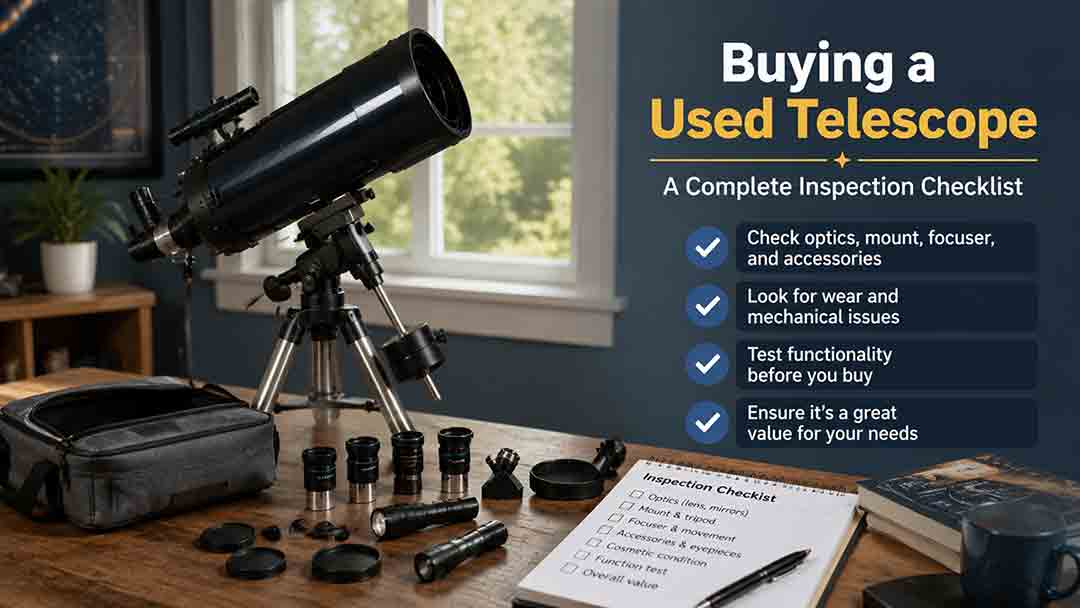
Buying a Used Telescope: A Complete Inspection Checklist
A used telescope can offer excellent value when the buyer verifies the exact model, ownership, optical condition, mechanical safety, electronic function, and complete accessory list before payment. This guide provides a structured inspection process for refractors, Newtonian and Dobsonian reflectors, Schmidt-Cassegrains, Maksutovs, manual and computerized mounts, eyepieces, filters, cameras, and smart telescopes. It distinguishes harmless dust and cosmetic wear from fungus, coating failure, bent hardware, water damage, unsupported electronics, and unsafe solar equipment. Readers also receive seller questions, daytime and nighttime test procedures, a repair-adjusted pricing formula, transaction-safety guidance, four practical scenarios, a buy-negotiate-walk-away framework, and a comprehensive printable checklist. The central recommendation is to price only verified function and preserve enough budget for missing parts, repairs, and uncertainty.
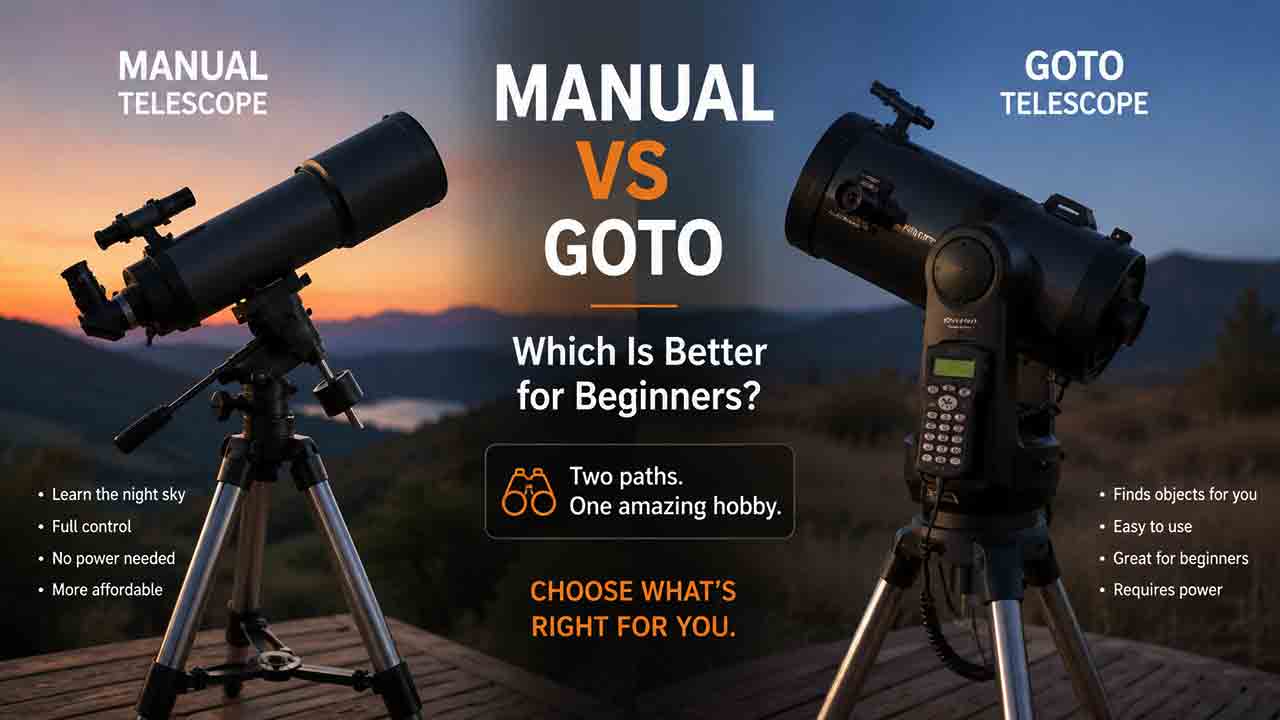
Manual vs GoTo Telescope: Which Is Better for Beginners?
Manual and GoTo telescopes solve different beginner problems. A manual telescope offers simpler setup, fewer electronic dependencies, and often more optical capability within a limited budget, while a GoTo telescope can locate cataloged objects and track them after a successful alignment. This comparison explains why GoTo does not improve aperture, remove light pollution, or automatically make a telescope suitable for long-exposure astrophotography. It compares setup time, tracking, portability, reliability, learning value, power requirements, and total ownership cost. The article also introduces the original TRACK decision framework, an illustrative break-even calculation for session time, five real-world buyer scenarios, separate purchase checklists, and troubleshooting tables for both manual and computerized systems. Beginners can use the guide to decide whether they prefer learning sky navigation, managing an electronic alignment workflow, or choosing a push-to system that combines manual movement with digital guidance."
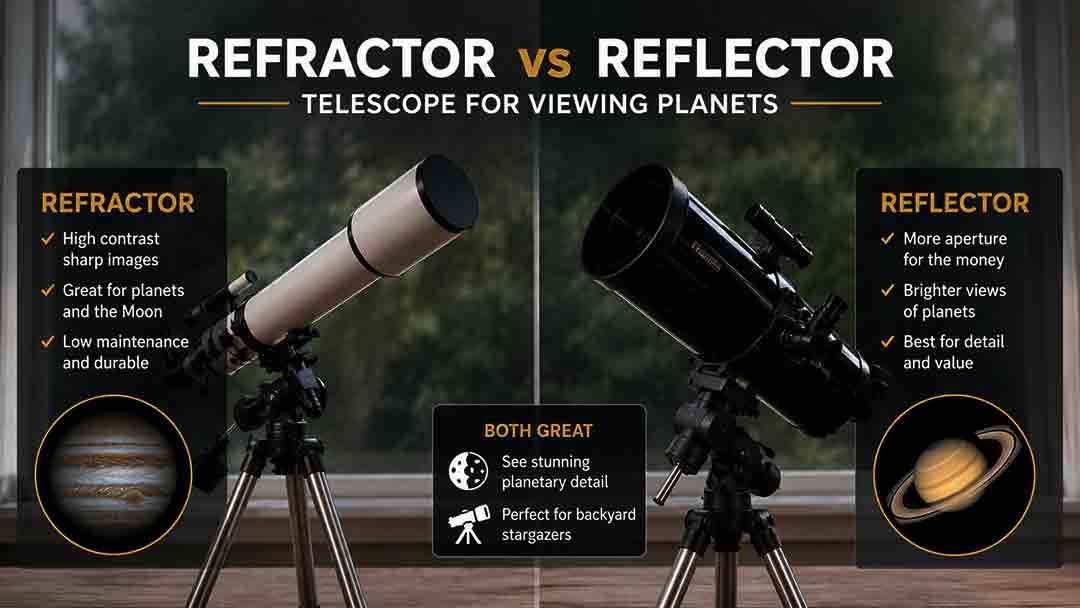
Refractor vs Reflector Telescope for Viewing Planets
A refractor is usually the easier planetary telescope at the same aperture, while a Newtonian reflector usually provides more resolving power for the same budget by offering a larger mirror. This guide compares unobstructed contrast, chromatic aberration, central obstruction, collimation, thermal preparation, mount stability, tracking, magnification, and portability. It explains how each design performs on the Moon, Jupiter, Saturn, Mars, Venus, Uranus, and Neptune, and separates equal-aperture, equal-price, and equal-portability comparisons. A 100 mm versus 150 mm aperture calculation, size recommendations, real-world buyer scenarios, a six-step decision framework, troubleshooting guidance, and a complete buying checklist help readers select a telescope that will deliver useful planetary performance in their actual observing environment.
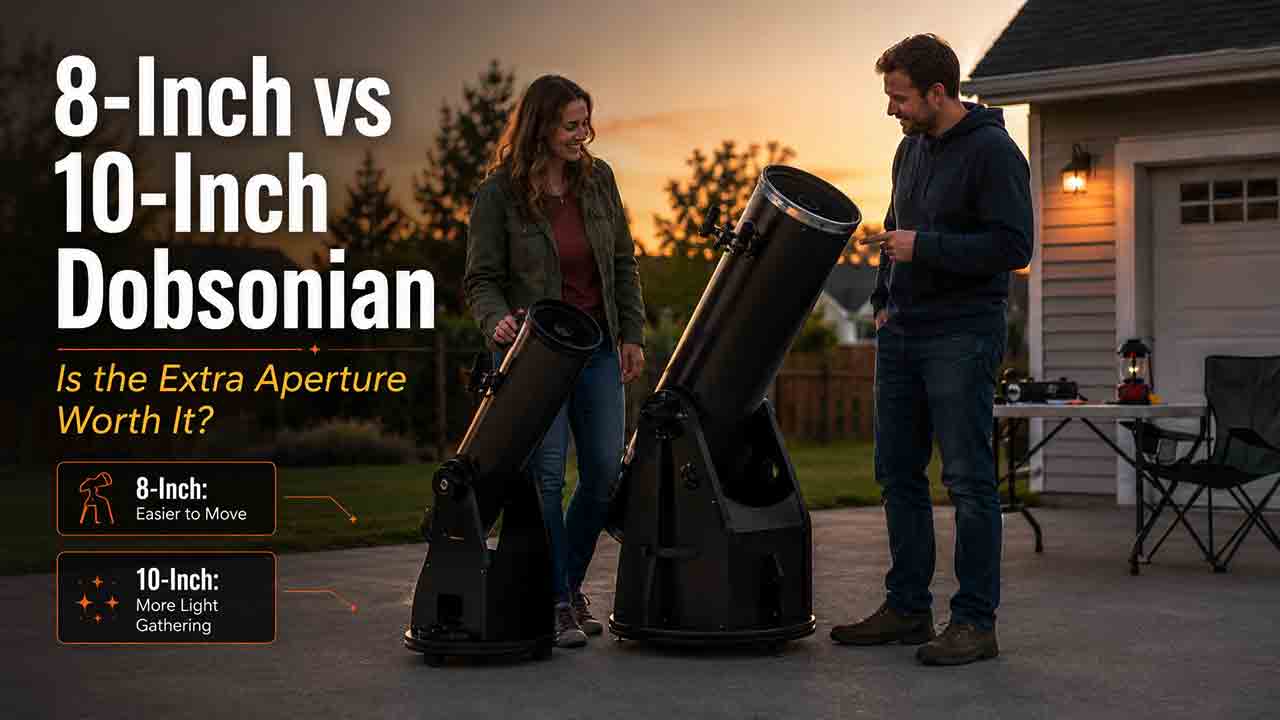
8-Inch vs 10-Inch Dobsonian: Is the Extra Aperture Worth It?
An 8-inch Dobsonian is the better default purchase for most first-time buyers, while a 10-inch is worth considering when deep-sky performance is the priority and the larger tube can be moved easily. This guide explains the 10-inch telescope’s approximately 56% greater nominal collecting area, higher theoretical resolution, and practical advantages on globular clusters, faint stars, galaxies, and nebulae. It also examines the less obvious tradeoffs: wider and heavier components, faster focal ratios, tighter collimation, more visible coma, larger exit pupils, thermal preparation, storage, vehicle fit, and total ownership cost. A same-series specification example, eyepiece calculations, real-world buyer scenarios, a transport fit test, troubleshooting guidance, and a detailed checklist help readers choose the telescope they are most likely to use regularly
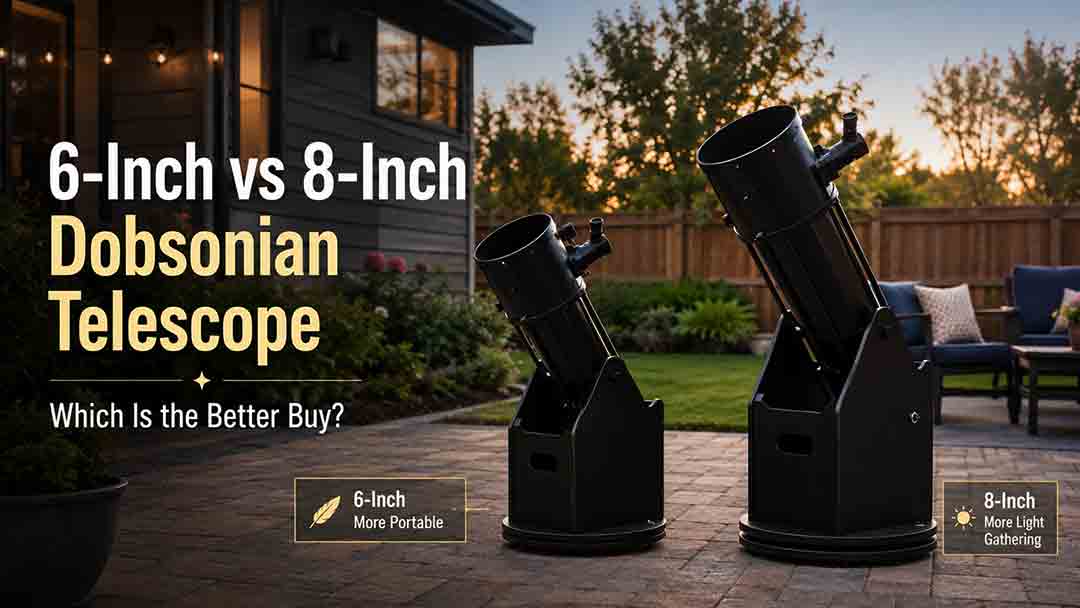
6-Inch vs 8-Inch Dobsonian Telescope: Which Is the Better Buy?
An 8-inch Dobsonian is usually the stronger optical value because its mirror has about 78% more gross collecting area than a 6-inch, providing greater reach for faint stars, globular clusters, nebulae, double stars, and fine lunar or planetary detail. A 6-inch Dobsonian can still be the better purchase when lower cost, a narrower tube, easier carrying, faster setup, and the forgiving behavior of a typical f/8 optical system lead to more frequent use. This comparison separates theoretical aperture gains from practical ownership. It uses a dated same-family specification example, gross mirror-area and aperture-per-dollar calculations, target-by-target recommendations, the original LIFT decision framework, a real-route carrying test, five ownership scenarios, a purchase decision tree, a complete buying checklist, common mistakes, and troubleshooting guidance. The guide does not claim hands-on testing and emphasizes checking the exact model’s weight, dimensions, accessories, and focal ratio